The intersection of fiber, rhythm, and identity through cloth.
Faso Dan Fani is a traditional handwoven textile from Burkina Faso, created on narrow-strip looms and assembled into larger cloth.
The name comes from the Dioula language, a widely spoken Mandé language used across West Africa, including Burkina Faso and Mali, as a shared language of trade.
Faso — homeland
Dan — woven
Fani — cloth
Cloth woven in the homeland.
Each strip is woven individually, then joined to form a continuous textile shaped by the weaver's hand and reflecting both individual craft and collective making.
Indigo dyeing develops through repeated immersion and oxidation, where air and time shape the final tone.
Patterns emerge through the interplay of weave structure, stripe sequencing, and the rhythm of the loom.
Rather than being applied to the surface, design is built into the fabric itself.
Traditionally woven by women, the practice is tied to community, identity, and economic independence.
Historically, Faso Dan Fani has carried cultural and political significance, symbolizing self-reliance and national pride.
In this context, both structure and color function as language.
No two are the same.
Human-made.
Intentional design.
Slow by tradition.
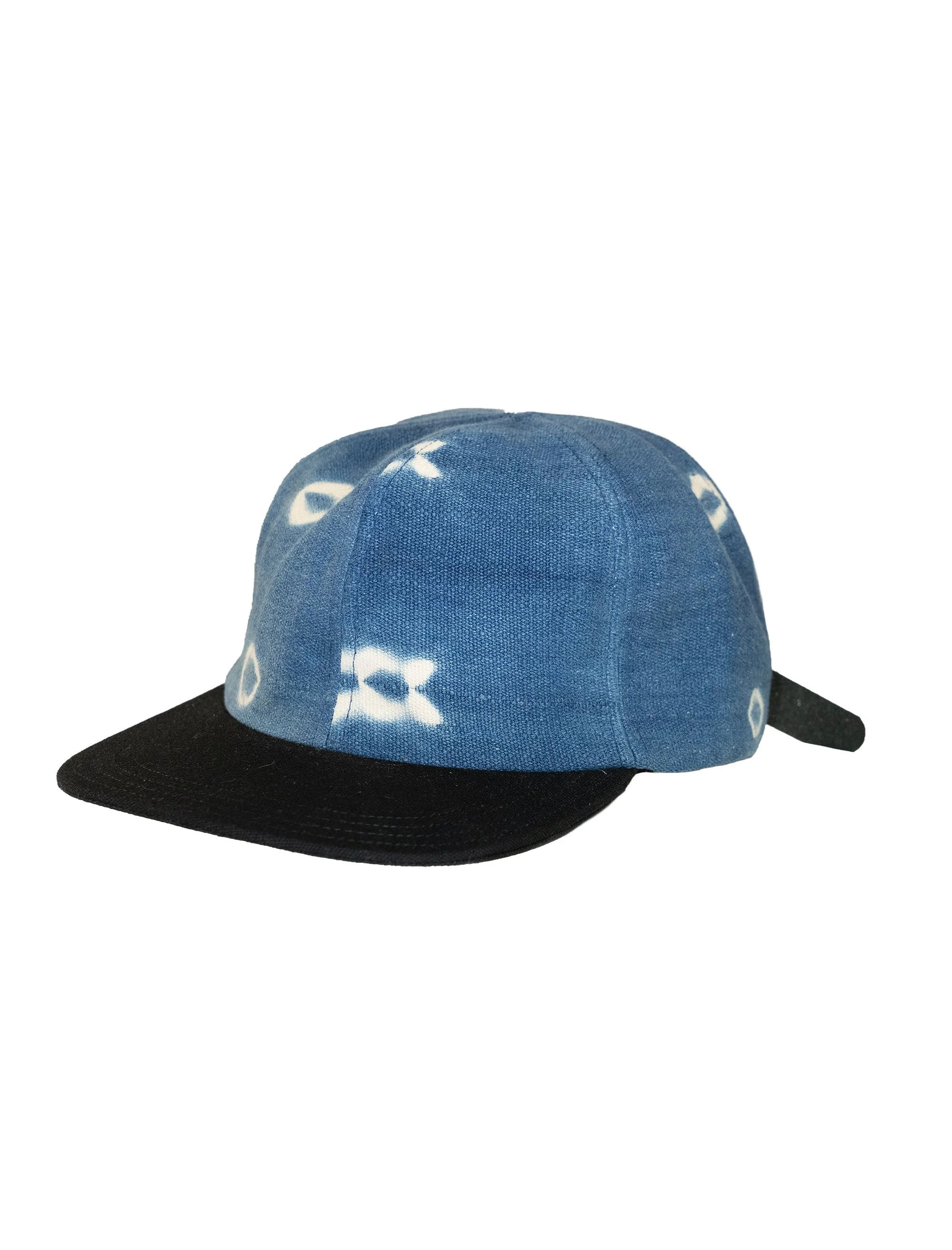
This piece reflects that origin.
Silk-lined interior
six-panel construction
Deep-cut fit: 11.5” x 7.5” x 4.25”
The intersection of fiber, rhythm, and identity through cloth.
Faso Dan Fani is a traditional handwoven textile from Burkina Faso, created on narrow-strip looms and assembled into larger cloth.
The name comes from the Dioula language, a widely spoken Mandé language used across West Africa, including Burkina Faso and Mali, as a shared language of trade.
Faso — homeland
Dan — woven
Fani — cloth
Cloth woven in the homeland.
Each strip is woven individually, then joined to form a continuous textile shaped by the weaver's hand and reflecting both individual craft and collective making.
Indigo dyeing develops through repeated immersion and oxidation, where air and time shape the final tone.
Patterns emerge through the interplay of weave structure, stripe sequencing, and the rhythm of the loom.
Rather than being applied to the surface, design is built into the fabric itself.
Traditionally woven by women, the practice is tied to community, identity, and economic independence.
Historically, Faso Dan Fani has carried cultural and political significance, symbolizing self-reliance and national pride.
In this context, both structure and color function as language.
No two are the same.
Human-made.
Intentional design.
Slow by tradition.
This piece reflects that origin.
Silk-lined interior
six-panel construction
Deep-cut fit: 11.5” x 7.5” x 4.25”