Tèmi origins - materials study 01
∃! TeMi-OC-001
the beginning.
people. place. purpose.
the collection:
10 one-of-one bōgōlanfini hats.
collector’s edition.
40 origins tees.
40 origins bandanas.
vintage heritage cloth. reclaimed cotton. screen printed with biochar ink.
made slowly, by people. on purpose.

TeMi-OC-hat-001
edition of 10
TeMi-OC-tee-001
edition of 40
TeMi-OC-bandana-001
edition of 40

Tèmi Origins - materials study 01
Bōgōlanfini // earth, cotton, cloth
Bōgōlanfini is a multigenerational textile tradition originating in West Africa, most notably Mali. Cotton is grown, ginned, spun, woven into narrow strips, and dyed by hand using plant extracts and fermented mud. Each piece carries the marks of the maker and the place from which it came.
The textiles used in the Origins materials study come from this tradition of cotton cultivation, weaving, and dyeing. Each cloth carries a history of people, place, and purpose long before it became a hat.
TEMI-OC-HAT-001-010
10 one-of-one hats
5 × 5-panel. 5 × 6-panel.
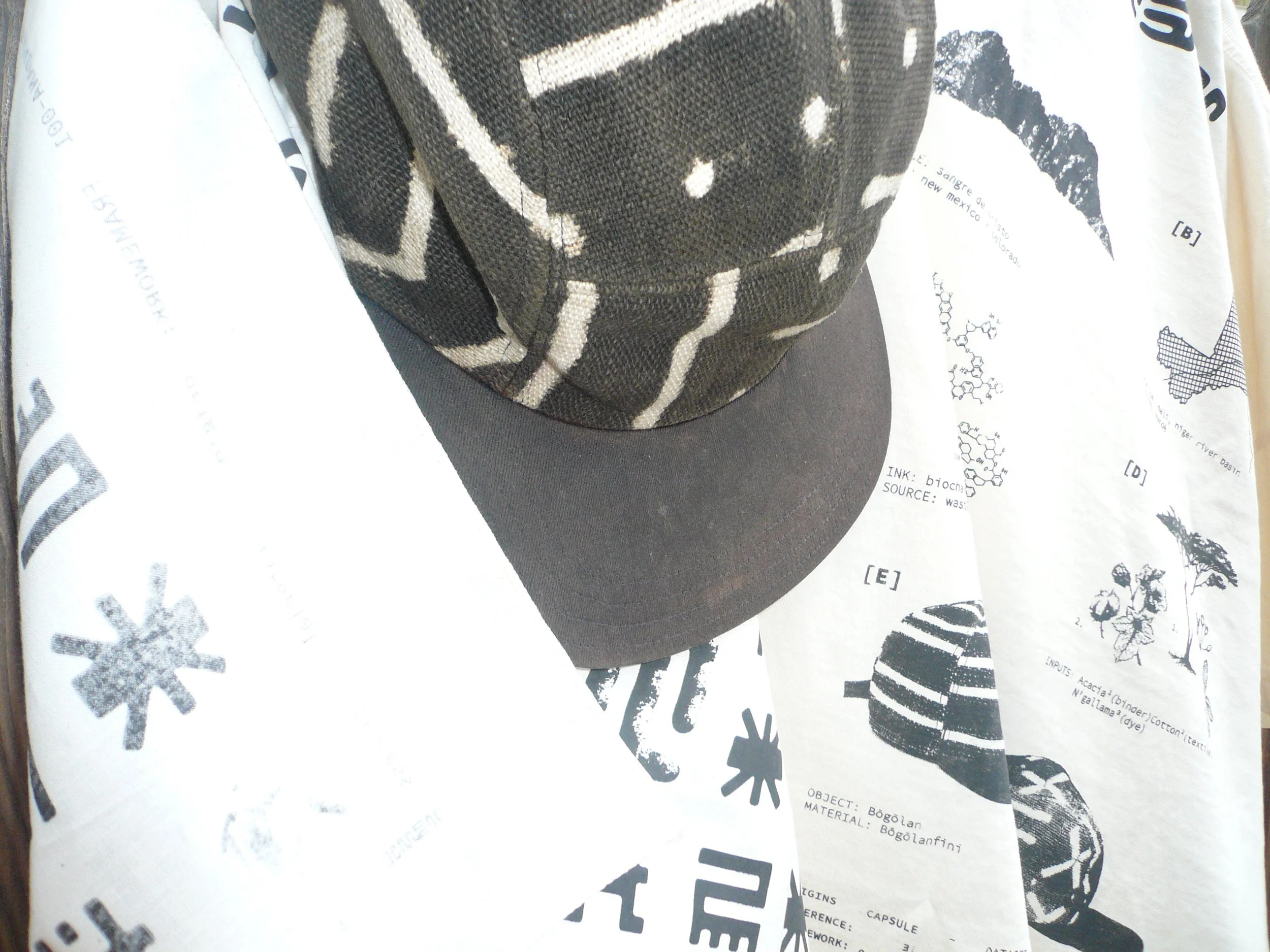
[ Heritage Bōgōlanfini cloth. Silk-lined. Deep fit. ]
Made by Andrew Wilson in Detroit, Michigan.
Further Reading & Listening
Bōgōlanfini is a living textile tradition with deep cultural and historical significance. For those interested in learning more, listen to this conversation exploring the history, craft, and meaning of Bōgōlanfini.
[Podcast Episode] https://open.spotify.com/episode/2fKzhweptJdJHLyXoprA1I?si=5b5a58d435334d5c

DATASET 01
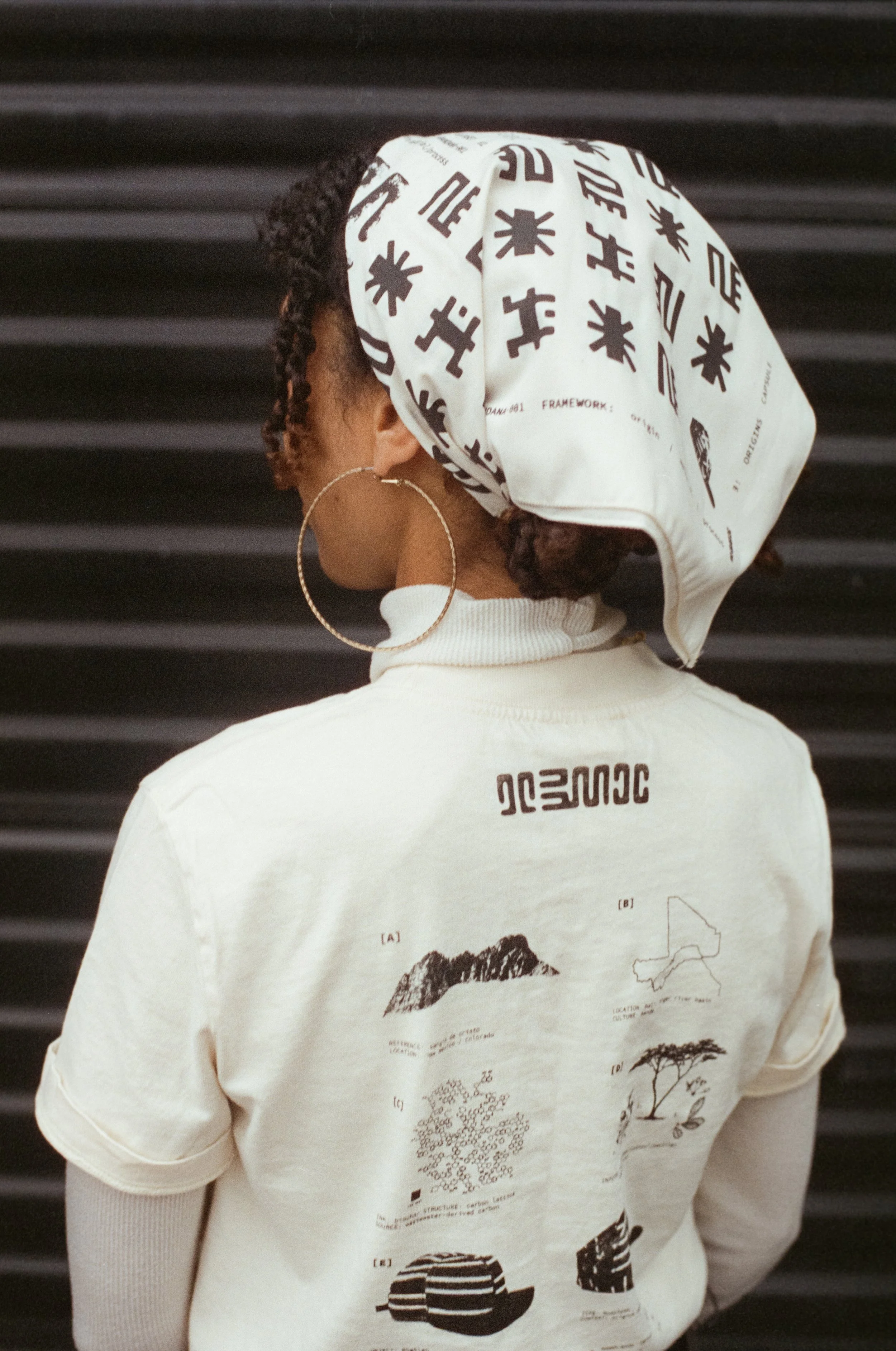
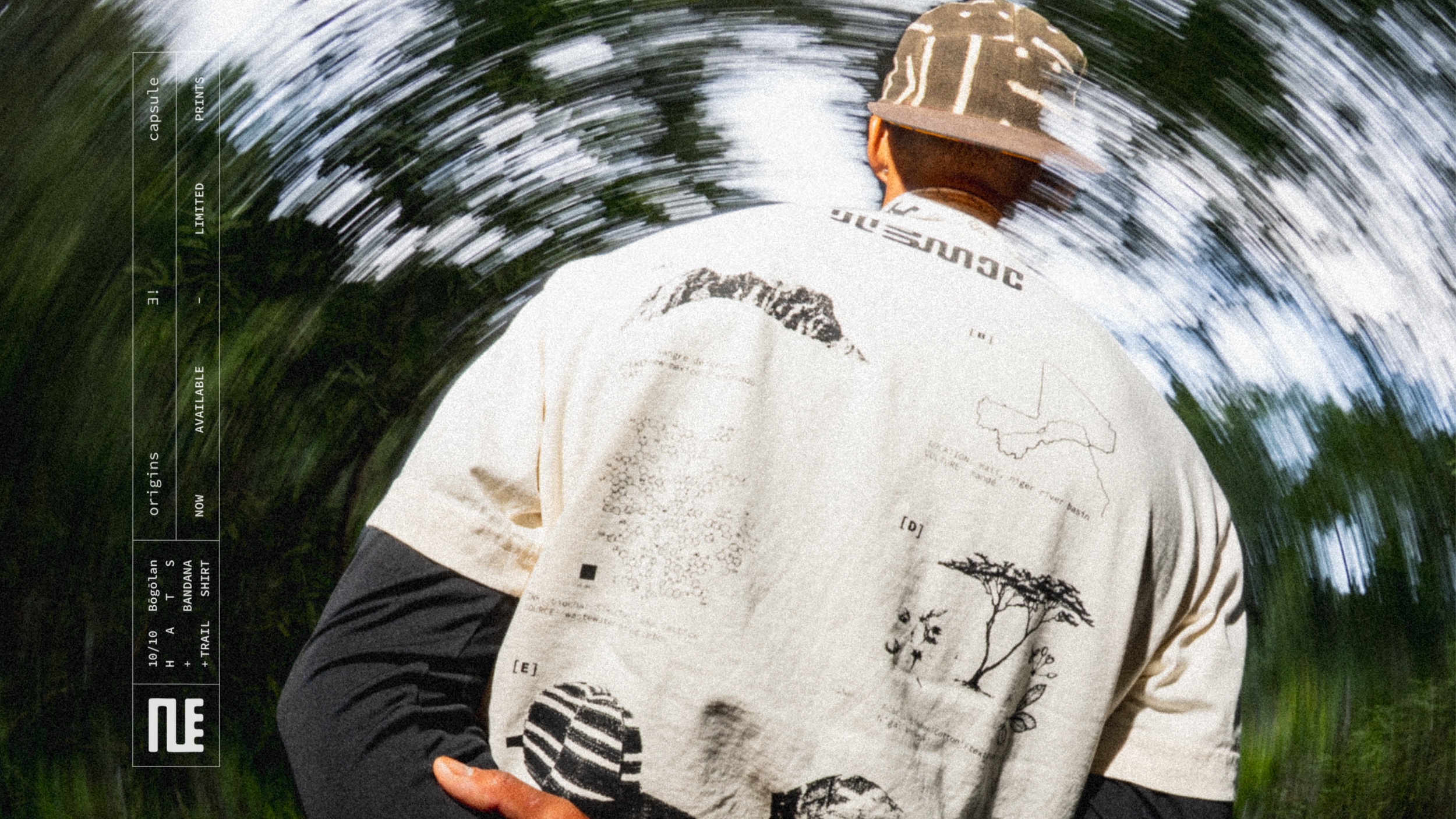
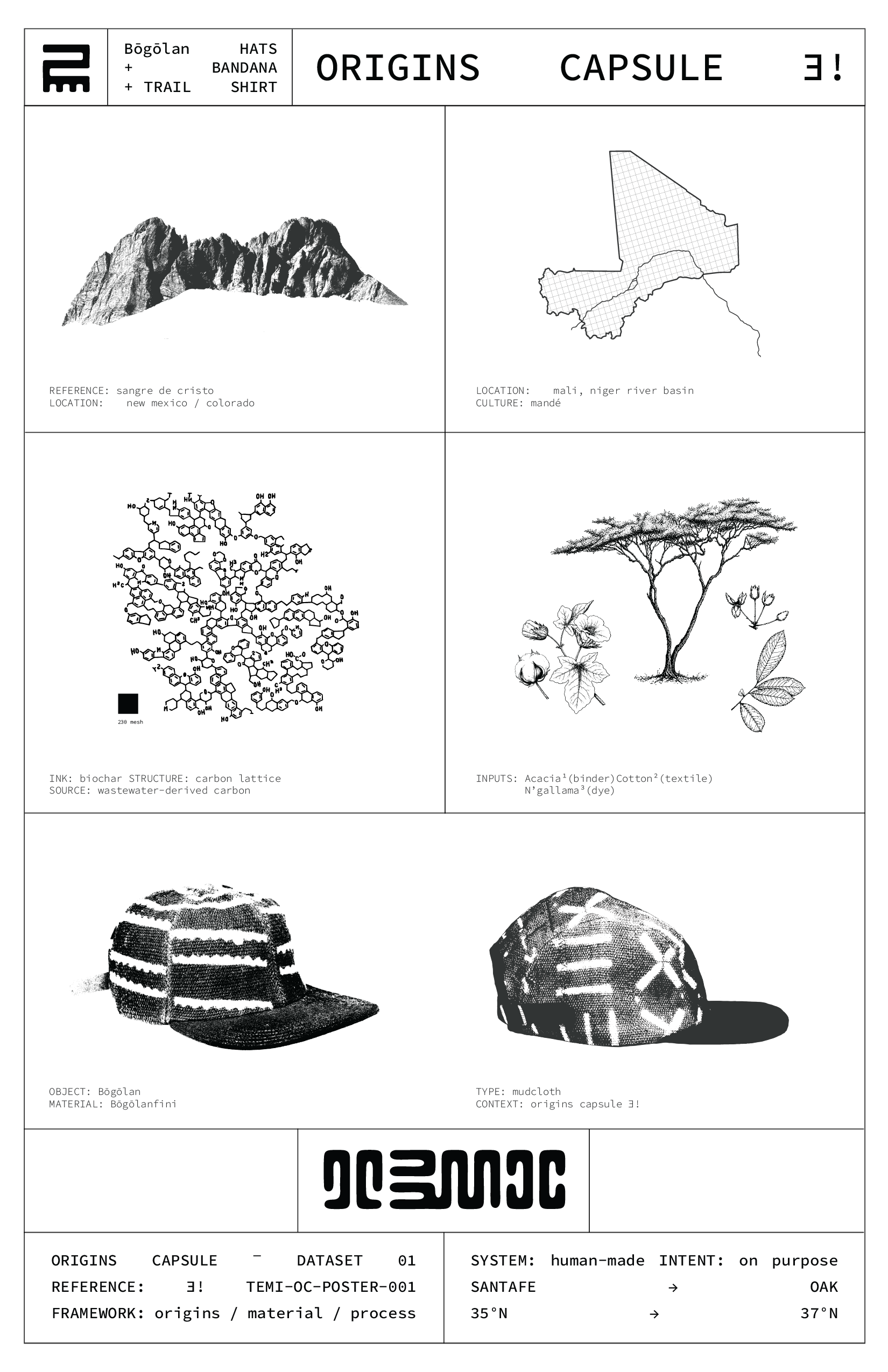
The back graphic functions as a living field document tracing the origins of the materials study through people, place, and process.
[A] Sangre de Cristo Mountains, New Mexico / Colorado
A reference to Crestone Needle and the Ellingwood Arete route, climbed by founder Gabriel Patterson in 2012. A geographic thread connecting Santa Fe, New Mexico, to the East Bay of California through mountains, movement, and memory.
[B] Mali, Niger River Basin
A reference to the Mandé cultural region and the origins of Bōgōlanfini, the traditional mud-dyed textile used throughout the Origins Capsule hat collection.
[C] Biochar
The structure and source of the biochar used to screen print the tees and bandanas. Derived from reclaimed wastewater organics, this panel serves as an ode to the founder's scientific background in materials science, carbon utilization, and waste-to-material systems.
[D] Plants, Fibers, and Dye Sources
The natural materials used in traditional Bōgōlanfini production, including cotton, acacia-derived binders, and plant extracts used in the dyeing process, like n’gallama.
[E] Object
The textile becomes an object. Bōgōlanfini cloth transformed into a one-of-one collector's edition hat.
[F] Collector's Edition
The completed artifact. Ten one-of-one hats were produced for the tèmi Origins Capsule 01, each carrying a unique history of material, place, and process.
Designed to be read slowly.
An invitation to curiosity, conversation, and connection.
temi-oc-bandana
People. Place. Purpose.
The Origins bandana explores the visual language of Tèmi through symbols, story, and repetition.
At the center is the Tèmi mark, derived from early explorations of the letters E and M within the brand name. During that process, a visual similarity emerged with Nkyinkyim, an Adinkra symbol and proverb of the Akan people of Ghana.
Nkyinkyim, or “life’s journey is twisted,” is associated with adaptability and the understanding that no path is linear.
That idea became foundational to Tèmi.
The name Tèmi comes from the Yorùbá phrase meaning "belonging to me." It is also the name of founder Gabriel Patterson's dog, Temi, who was named after Nigerian singer-songwriter Tems, whose given name is Témìládé.
https://open.spotify.com/track/7FOxF0hOFu8KVqSR9Qzluy?si=d570eb3126fc41c8
Within the Origins Capsule, the symbol represents purpose.
Not a destination, but a path.
A reminder that adventure exists in many forms: city streets and mountain trails, coffee runs and alpine starts, early morning dog walks and long days outside.
No one person's adventure is greater than another's.
The in-betweens matter too.
Screen-printed with biochar ink on reclaimed cotton, the bandana functions as both an object and a field document. a study of people, place, and purpose through material, symbol, and process.
TEMI-OC-BANDANA
Edition of 40.
Made slowly. On purpose.